• BCSA Website
  • Roger Grund

South Australian
Butterflies & Moths

  • Home
  • Overview
    • Introduction
      • Key for Identifying SA Skippers
      • Key for Identifying SA Butterflies
    • Biology
    • Stories
      • Mistletoe
      • Caper White Migration
    • Butterfly Gardening
      • Common Urban Butterflies
      • Rarer Urban Butterflies
    • About Author
    • About Designer
  • Data Sheets
  • Conservation
    • Habitat Types
    • Habitat Restoration
      • Checklist
      • Details
    • Conservation Status
      • Checklist
      • Details
  • Food Plants
  • SA Regions
    • Adelaide Plains
    • Far North Pastoral
    • Flinders and Olary
    • Gawler Nullarbor
    • Kangaroo Island
    • Murray
    • North Mt. Lofty
    • South Mt. Lofty
    • Northern Eyre Peninsula
    • Southern Eyre Peninsula
    • Lower Southeast
    • Upper Southeast
    • Yorke
  • Sun-moths
    • South Australian Moths
    • About SA Sun-moths
    • Different Species
      • Nullarbor Sun Moth
      • Small Orange Spotted Sun Moth
      • Flinders Ranges Sun Moth
      • Kangaroo Island Sun Moth
      • Reddish-orange Sun Moth
      • Larissa's Sun Moth
      • Orange Sun Moth
      • Orange Spotted Sun Moth
      • Golden Sun Moth
      • Pale Sun Moth
      • Cryptic Sun Moth

Gallery

Catalog Dingy or Dainty Swallowtail Gallery

Adults

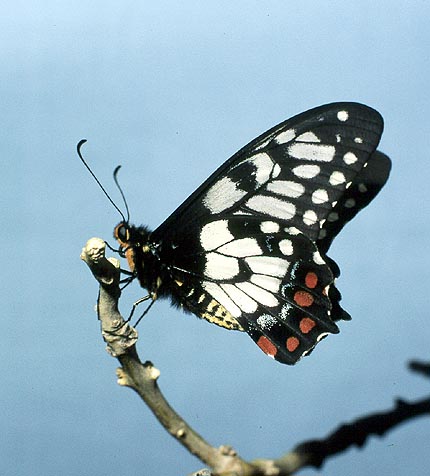
anactus_ad.jpg (39.9 KB)

Male

Mimic Model

cressida_ad_m.jpg (40.2 KB)

Photography by R. Fisher

Male

Greasy Swallowtail
Cressida cressida cressida (Fabricius)

polydoraqueensl_ad_f.jpg (33.0 KB)

Photography by R. Fisher

Female

Red-bodied Swallowtail
Atrophaneura (Pachliopta) polydorus queenslandicus (Rothschild)

Food Host

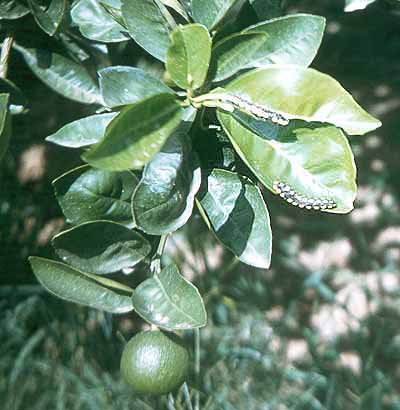
anactus_la_orange.jpg (32.9 KB)

Mature larvae feeding exposed on the young leaves of an orange tree

Eggs

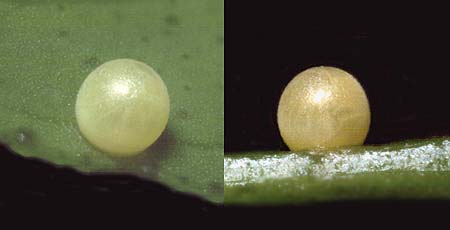
anactus_eg_early.jpg (14.9 KB)

Newly laid egg

anactus_eg_late.jpg (18.7 KB)

Egg near the point of larva emergence

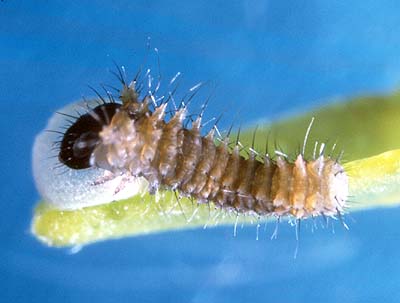
anactus_egla_first_early.jpg (31.1 KB)

Newly emerged larva after eating its egg shell (right)

Larvae

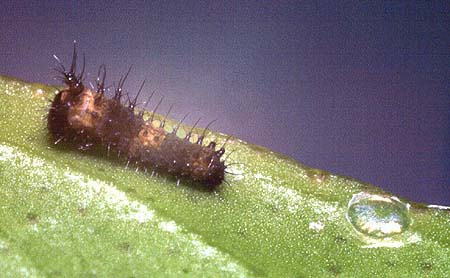
(Head to the left in all photographs)
anactus_la_first_early2.jpg (21.0 KB)

Photograph by R. Fisher

First instar larva immediately after emerging from egg

anactus_la_first_late.jpg (33.5 KB)

First instar larva about to moult

anactus_la_second_early.jpg (28.0 KB)

Second instar larva soon after moulting

anactus_la_third_early.jpg (30.1 KB)

Third instar larvae

The larva at the bottom has just completed a moult and the head is still yellow, which soon turns black.

anactus_la_fourth_late.jpg (38.8 KB)

Fourth instar larva

anactus_la_final.jpg (28.6 KB)

Fifth and final instar larva

anactus_la2_final.jpg (32.2 KB)

Fifth and final instar larva

anactus_la4_final.jpg (53.1 KB)

Prepupal larvae

anactus_larv_osmet.jpg (30.0 KB)

Final instar larva extending its osmeterium (arrowed),
which is located just behind its head.

anactus_la3_final.jpg (20.9 KB)

Mature larva showing from where the osmeterium originates (arrowed).

Pupae

anactus_pu_girdling.jpg (31.0 KB)

Larva in the process of girdling, one day before pupating.
Left photo shows it putting the finishing touches to the silk girdle.
Middle photo shows it manoeuvring the girdle above its head, and with a deft nod and a shrug the girdle is soon around its waist (right photo). The girdle anchor points are clearly visible on the twig.

anactus_pupating.jpg (71.4 KB)

Larva in process of pupating.
Photo 1 to left shows the prepupa one day before pupation.
Photo 2 at the start of pupation (0 minutes).
Photo 3 one minute later showing the outer larval skin (almost transparent) splitting from the head down along the back (dorsal surface) visible as the yellow V.
Photo 4 after 3 minutes shows the skin about two thirds the way down on the backside with the larva pulsating all the time forcing the skin to its posterior end (bottom of photo).

anactus_pupating2.jpg (76.2 KB)

Photo 5 after 5 minutes showing the skin has been completely forced down to the bottom.
Photo 6 after 8 minutes shows the (now) pupa having discarded the outer larval skin and attached itself to the white silken pad on the twig by its cremaster and settled comfortably into its girdle.
Photo 7 after 18 minutes and Photo 8 after 30 minutes show the pupa in the process of contracting its abdomen and elongating its wings.

anactus_pupating3.jpg (68.1 KB)

Photo 9 after 42 minutes show the pupa nearly completely formed but still soft and green coloured.
Photo 10, 11 & 12 two days later showing the pupa fully formed and hardened, and in this case a brown coloured form.
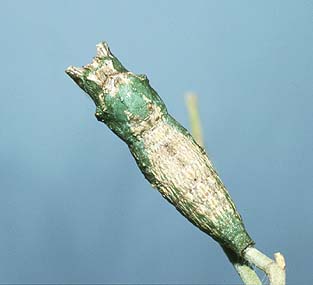
anactus_pu.jpg (15.0 KB)
anactus_pu2.jpg (17.1 KB)

Green coloured form of pupa

All photography by R. Grund unless stated otherwise.